
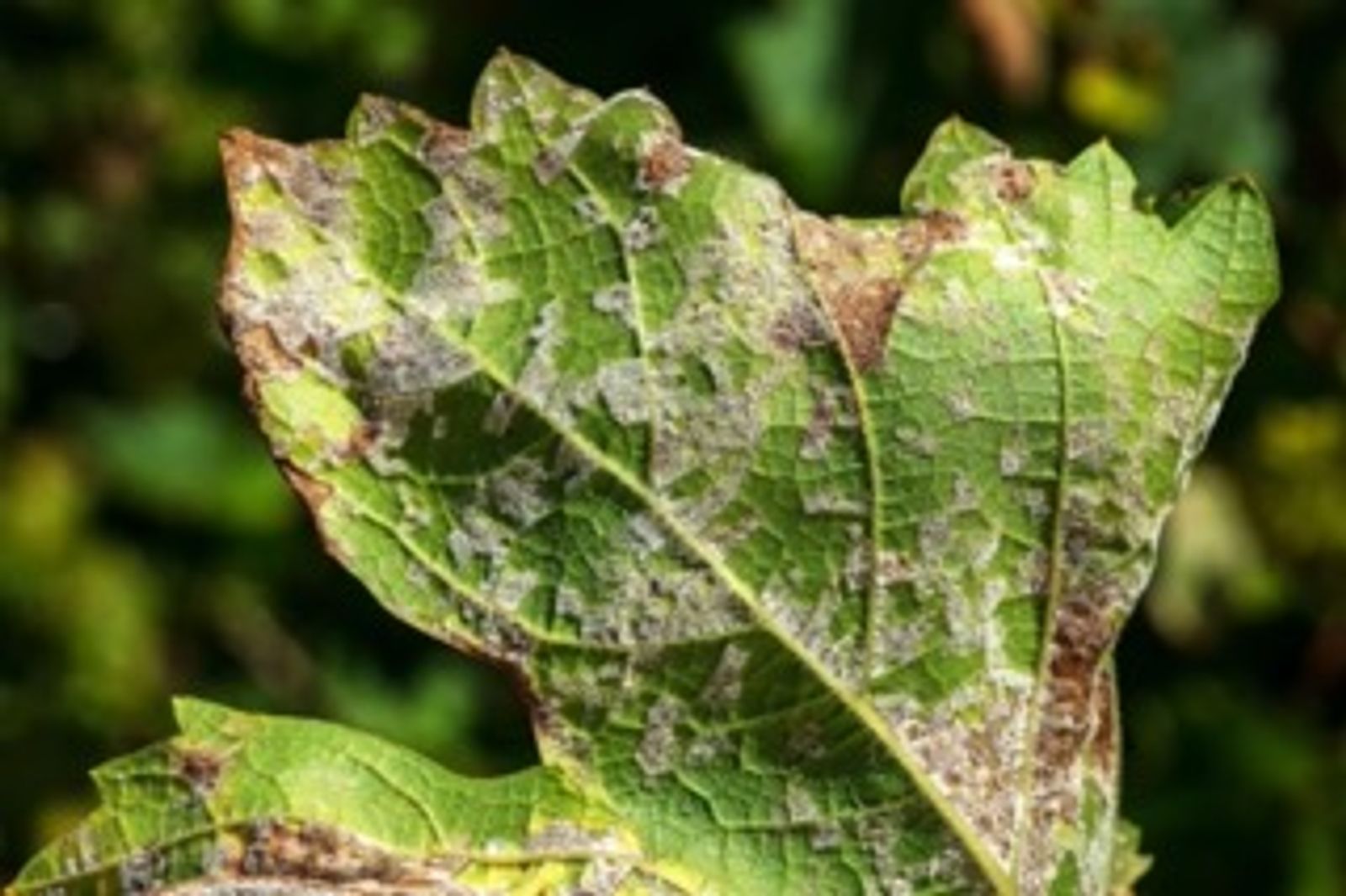
In vineyards, disease doesn’t arrive without warning. It announces itself quietly – in the hours of moisture on a leaf, the rise and fall of humidity, and the rhythm of temperature changes across the day. Learning to read those signals empowers you to act long before symptoms appear.
Understanding how microclimate drives infection isn’t new science – viticulturists have been tracking it for decades. What’s changed is our ability to measure it accurately, inside the vineyard, in real time. Sensors, in-block weather stations, and AI-based analysis now make it possible to see conditions not as a general forecast, but as they develop between the rows.
Why microclimate matters
Most vineyard diseases – from Plasmopara viticola (downy mildew) and Erysiphe necator (powdery mildew) to Botrytis cinerea (bunch rot) – depend on a narrow set of environmental conditions to infect. These pathogens don’t strike randomly; they wait for the right mix of temperature, humidity, and leaf wetness to complete their life cycles.
- Downy mildew thrives when leaf surfaces stay wet for several hours and temperatures sit between roughly 11–25 °C. Warm, humid nights followed by rain or heavy dew often open infection windows.
- Powdery mildew doesn’t need liquid water – high relative humidity (above 85%) and temperatures around 20–27 °C are enough to trigger rapid growth on leaves and fruit.
- Botrytis risk rises when humidity remains elevated for long periods, especially as fruit approaches ripening and canopy shade increases.
Traditional weather stations, often kilometers away, can’t capture these subtle, short-lived events. A five-minute rain shower or overnight dew in one block might go completely unrecorded, yet it’s enough to start a new infection cycle.
The role of leaf wetness
Leaf wetness duration – the total number of hours a leaf stays damp – is one of the most critical and most misunderstood variables in viticulture. It’s not simply about rainfall; dew, fog, and humidity condensation can keep leaves wet long after the sky clears.
Research from institutions such as Cornell University and INRAE has shown that infection potential for downy mildew rises sharply when leaves remain wet for 6–10 hours at moderate temperatures. Once those thresholds are reached, spores germinate and penetrate the leaf tissue.
In-block leaf-wetness sensors simulate this process using conductive or capacitive surfaces that respond when moisture forms. Placed within the canopy, they provide minute-by-minute data that can be correlated with temperature and humidity to identify high-risk periods – something even experienced vineyard managers can’t do by eye.
Humidity: the invisible driver
Relative humidity doesn’t just influence leaf wetness; it shapes the entire vineyard microclimate. When air stays moist overnight, evaporation slows, canopies dry later, and diseases have more time to take hold.
High humidity also favours spore survival and dispersal. Studies from UC Davis and CREA show that mildew spores survive longer and spread farther in consistently humid conditions, especially when combined with light winds that move them through the canopy.
Humidity data from in-block weather stations, or from soil–air–canopy sensor networks, can therefore be one of the earliest warnings of changing disease pressure. In drought years, this becomes particularly valuable: even if rainfall is low, localised humidity spikes – from irrigation, dense foliage, or nearby vegetation – can still create infection pockets.
Temperature and timing
Temperature sets the pace for every pathogen. Too cool, and development slows; too warm, and spores dry out or die. But within their preferred range, fungal and oomycete diseases can complete a full cycle in a matter of days.
Monitoring diurnal temperature variation – not just daily averages – is crucial. Large swings between day and night can suppress or accelerate disease, depending on how they interact with canopy humidity and moisture. Temperature sensors placed at leaf height or within fruit zones provide this finer detail, allowing growers to interpret not just risk but timing.
From data to insight: how AI will transform vineyard decisions
Traditional disease-risk models such as Goidanich’s or Gubler–Thomas have guided growers for decades. They’re proven and valuable, but they work from a single set of readings, often from one weather station, and assume those conditions apply across the vineyard. In practice, every grower knows that’s rarely true. A low-lying block might stay damp for hours after the ridge has dried, and a slight difference in aspect can change temperature and humidity dramatically.
Modern AI-driven systems build on those established models but learn from the complexity that older tools couldn’t capture. By combining data from multiple sensors – soil moisture, canopy temperature, leaf wetness, solar radiation – and comparing it with past disease events, AI can identify which microclimates within the vineyard carry genuine risk, adjust recommendations automatically as local data changes, and predict infection windows with far greater accuracy.
Over time, these models learn from each season, improving with every block monitored and every event recorded. The result isn’t just prediction, but decision confidence – knowing when not to treat is just as valuable as knowing when to act.
AI also makes this intelligence more accessible. What once required a specialist pathologist or analyst can now be delivered as a simple dashboard or mobile notification, allowing growers to combine data with their own experience.
Turning information into action
Interpreting these signals leads to smarter, more sustainable – and more cost-efficient – decisions.
Every unnecessary spray carries a cost: in chemicals, time, labour, and fuel. Treating preventively across an entire vineyard, or just before rain that washes protection away, is money lost. Accurate data helps growers target treatments precisely, limiting applications to the blocks and timings that matter.
By avoiding over-application, growers reduce both cost and environmental impact, while maintaining or improving control. For many vineyards, the saving from one fewer spray per season can offset the cost of installing monitoring hardware.
Confidence in prediction models is key. When growers can see their own vineyard’s data – temperature, humidity, and leaf-wetness curves tied to real outcomes – trust grows naturally. Over time, prediction shifts from something theoretical to something proven, season after season.
Why this matters in Mediterranean vineyards
In Mediterranean regions such as Tuscany, the challenge is volatility – hot, dry stretches punctuated by short, intense rain events. These conditions can compress infection cycles into narrow windows that traditional monitoring misses.
Localised sensors provide the clarity to see when those windows open. A storm in late May may trigger downy mildew in a low-lying block but leave an adjacent hillside untouched. Having granular data at block level allows decisions to be selective, timely, and proportionate.
With climate variability increasing, this ability to detect and interpret microclimate signals isn’t a luxury; it’s becoming essential to protect both yield and quality while minimising chemical input.
Conclusion
Leaf wetness, humidity, and temperature are not just weather data – they are the language of disease. Learning to read that language, through a combination of observation, data, and technology, gives growers the insight to anticipate rather than react.
For Aurelia and forward-thinking vineyards, AI represents the next step in that journey – turning data into real-time guidance that cuts cost, reduces waste, and builds resilience.
Whether measured by a simple in-block sensor, an integrated weather station, or analysed by AI models drawing on years of field data, the principle is the same: conditions create opportunity, and those opportunities can be seen, measured, and managed.
For vineyards balancing tradition with innovation, this understanding is the foundation of resilience – and of healthier vines in a changing climate.