
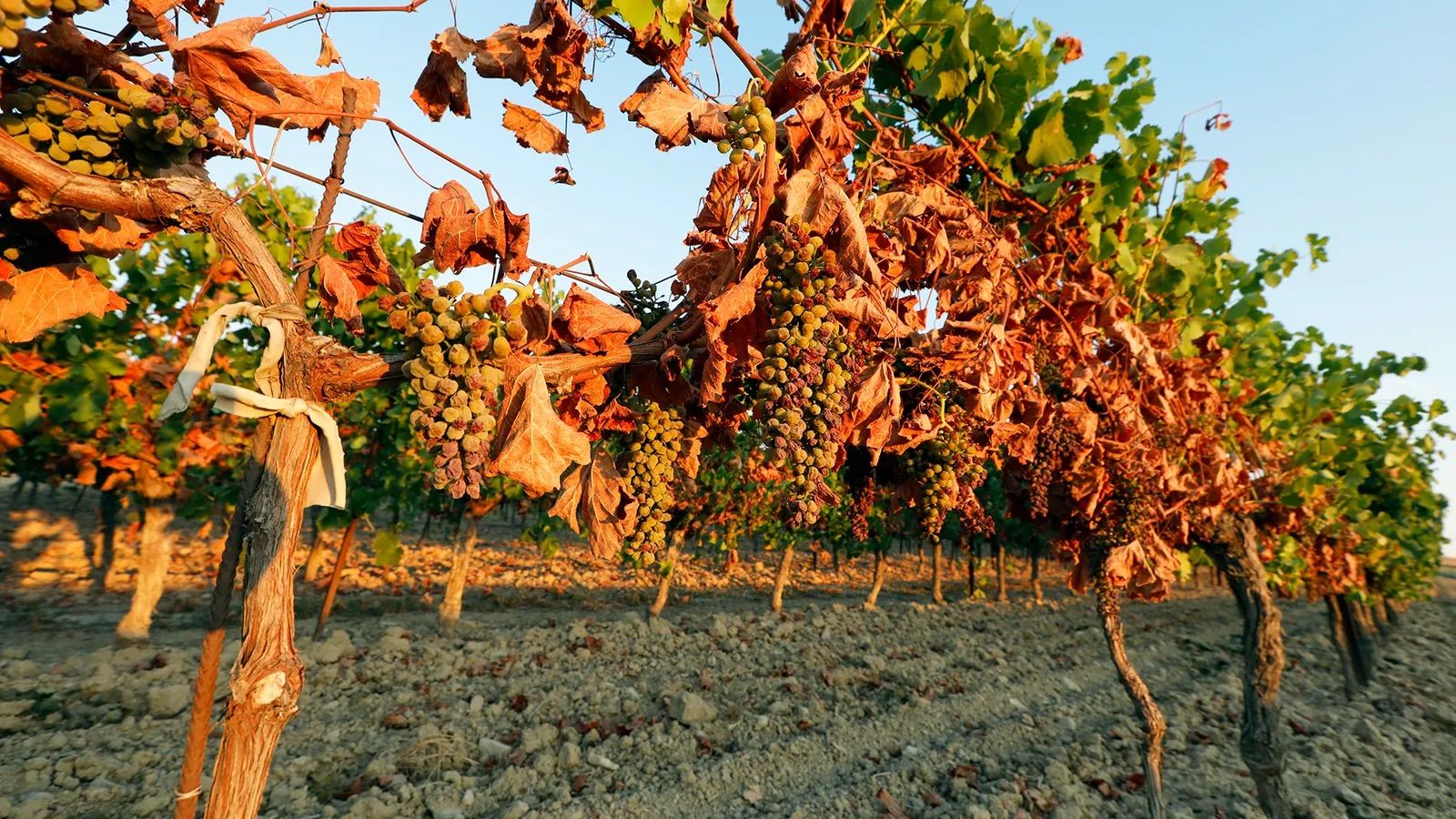
When the first Italian heatwave of summer hits, it rarely arrives gently. One week the vines are in perfect balance; the next, the canopy is stressed, fruit is softening, and schedules are disrupted. The key isn’t endurance – it’s preparation.
Understanding how to use temperature and radiation data to plan vineyard work ahead of extreme heat can make the difference between a well-managed event and a costly one.
The new normal: heat as a vineyard challenge
Mediterranean vineyards are facing longer, hotter, and more frequent heat events. Data from CREA and Copernicus show that central Italy now experiences 10–20 more days each year above 35 °C than two decades ago – enough to stress even well-established vines.
Extreme heat affects every layer of vineyard life:
- Canopies lose efficiency as stomata close to prevent water loss.
- Fruit risks sunburn and shrivelling.
- Operations become harder to manage as safe working hours and equipment performance narrow.
Most growers have learned to live with heatwaves – adjusting schedules and trusting vine resilience – but the trend is shifting from the occasional extreme to a predictable seasonal event. That means planning must start earlier, using data to anticipate and act before the thermometer climbs.
Reading the warning signs
Just as leaf wetness and humidity data reveal infection risk, temperature and radiation patterns reveal heat stress risk. In-block weather stations or canopy-level sensors can identify when conditions are moving from “hot” to “critical” – not just in the air, but within the canopy itself.
Key indicators include:
- Leaf temperature exceeding air temperature by more than 5 °C – an early sign of stomatal closure and stress.
- Solar radiation above 800–900 W/m² – a threshold where exposed clusters begin to burn.
- Night temperatures above 22–24 °C – reduced vine recovery and higher respiration costs.
By combining these with short-term forecasts, growers can create a pre-heatwave plan days in advance rather than reacting in the moment.
Pre-heatwave checklist: vines
Canopy protection
Leaf removal and shoot positioning directly influence fruit exposure. In regions like Tuscany, where sunlight is already intense, aggressive defoliation on the western side of the row can leave clusters vulnerable.
Use canopy sensors or drone imagery to map radiation exposure and target leaf removal more selectively. The goal is filtered light, not full sun.
If your vineyard uses shade cloths or reflective ground covers, inspect fittings and materials before peak season. Temporary shading over young or newly grafted vines can prevent irreversible damage.
Soil moisture and irrigation
Even dry-farmed vineyards rely on residual soil moisture for cooling and transpiration.
Probes showing a drying profile in the upper 30–60 cm signal that vines will struggle to regulate canopy temperature.
Where irrigation is available, pre-charging the soil ahead of a heat event is more effective than watering during it. It stabilises vine water potential and reduces canopy temperature swings.
Nutrient and stress balance
Heat stress amplifies nutrient imbalances – particularly potassium and calcium, which affect berry integrity. Tissue sampling ahead of forecast extremes can help identify adjustments to foliar nutrition plans.
Pre-heatwave checklist: operations and scheduling
Heat affects vineyard work as much as vine physiology. When temperatures rise, the same data that signals stress for fruit can guide operational efficiency – helping managers plan the right jobs at the right time.
- Reschedule intensive work (e.g. wire lifting, trimming, green harvest) to early morning or cooler days.
- Sequence blocks by exposure: work lower or shaded areas during the hottest hours; leave ridge-top or west-facing rows for early morning.
- Use microclimate alerts to anticipate conditions and communicate with teams – a simple in-block threshold alert can trigger a switch in daily workflow.
- Manage equipment loads: tractors and sprayers operate less efficiently at extreme temperatures; plan maintenance and fuel storage accordingly.
Planning in this way doesn’t just protect crews – it preserves productivity. When vineyard operations align with temperature data, work continues smoothly and safely through the season.
Protecting fruit quality
Sunburn doesn’t just mark berries; it alters flavour, tannin structure, and colour development. The most severe losses often occur 48–72 hours after peak temperature, when damage becomes visible.
To reduce risk:
- Use thermal or multispectral drone imaging to identify hotspots in the canopy.
- Avoid trimming or hedging immediately before a forecast heatwave – exposing fruit before radiation peaks greatly increases burn risk.
- Monitor ripening blocks closely: thin-skinned varieties such as Sangiovese and Pinot Noir are particularly sensitive.
- Avoid late foliar sprays in high heat – they can intensify burn on exposed leaves and fruit.
Growers using canopy temperature data can also integrate AI-driven alerts. Over time, these models learn what “normal” canopy cooling looks like for each block and can flag anomalies days before visible damage appears.
From data to decision: using AI to plan for heat
AI-powered models can now combine temperature, radiation, soil moisture, and weather data to guide vineyard actions precisely. Instead of static thresholds, these systems analyse patterns – predicting when and where heat stress will occur, and suggesting the best interventions:
- “Pre-irrigate Block 7; canopy temperature rising faster than normal.”
- “Delay leaf removal; forecast radiation spike within 48 hours.”
- “Shift pruning or mechanical work to morning window tomorrow.”
By comparing predictions with outcomes over time, AI learns from each heat event, refining future recommendations and boosting confidence in automated guidance. For growers, this means fewer wasted actions, less downtime, and lower input costs – without sacrificing fruit quality.
Cost and confidence
Managing heat efficiently is as much about economics as agronomy. Irrigating, spraying, or shading at the wrong time wastes money and resources. Poorly timed labour scheduling adds hidden costs in fuel, overtime, and lost hours. Using reliable microclimate data and predictive analytics helps growers:
- Reduce wasted inputs by timing actions precisely.
- Protect yields from heat-related losses.
- Increase labour efficiency by aligning work with conditions.
Every unnecessary operation avoided strengthens profitability. And when predictions prove reliable, trust in the system builds naturally – turning technology from a novelty into a valued management tool.
Conclusion
Heatwaves will continue to test Mediterranean viticulture – but they don’t have to dictate outcomes. By using data to anticipate stress, preparing vines and operations systematically, and integrating AI-based decision tools, growers can protect both fruit and productivity while reducing costs and disruption. Resilience doesn’t come from technology alone; it comes from understanding the vineyard well enough to act at the right moment. Technology simply makes that insight faster, clearer, and more confident.