
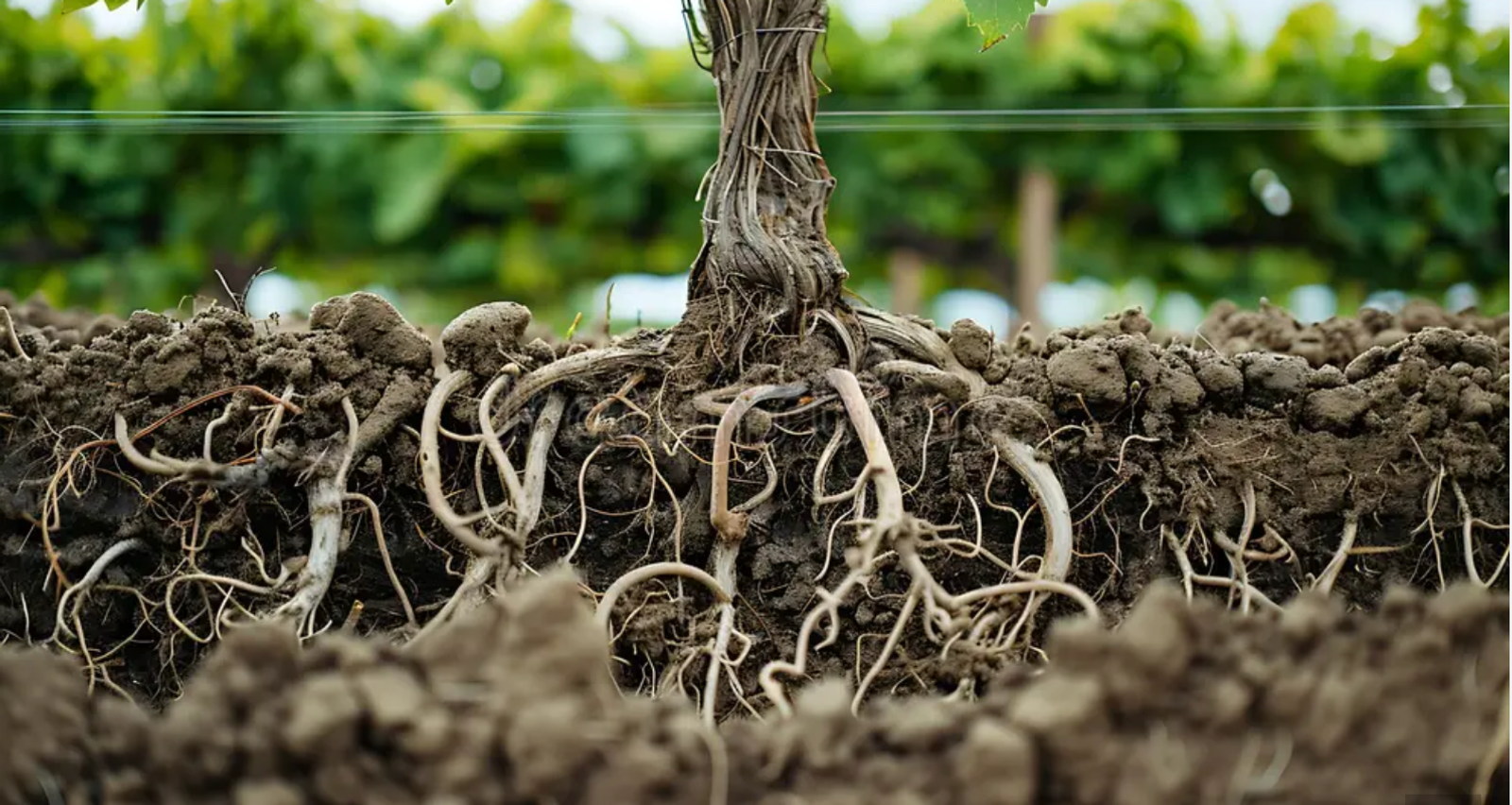
Rain is a blessing for dry-farmed vineyards, but it also brings a challenge: when can you safely get machinery back on the block? Working soils when they’re still saturated leads to compaction - closing pore spaces, reducing infiltration, and damaging structure for years to come. The cost of one badly timed pass can last far longer than the season.
Total rainfall doesn’t answer the question. Twenty millimetres on the gauge might mean the profile is recharged, or it might only have dampened the surface. The only way to know is to see how water has moved through the soil. That’s where profile probes at multiple depths come in.
In this post, we’ll show how to read the infiltration “steps” and the decay curve that follows, and how to use that knowledge to plan vineyard operations with confidence. At the end, you’ll find a simple week-planning checklist you can use with your team.
Why Rainfall Totals Don’t Tell the Whole Story
Every grower knows the frustration of a heavy downpour that barely makes a difference in the vineyard. A storm that looks impressive on the surface might only soak the top 10–20 cm of soil, leaving the mid- and deep layers untouched. Conversely, a steady rain over several hours might deliver less total water but recharge the profile far more effectively.
Relying on rainfall totals or surface checks often leads to mis-timed fieldwork. The ground may look dry enough on top, but if the mid-layer is still saturated, tractors and sprayers can cause serious compaction. Sensors at depth tell you the truth: how far the water really went and how long it takes to drain to workable levels.
Reading Infiltration Steps
When rain infiltrates, soil moisture probes record a distinct “step” - a sharp rise in the data trace. Each depth shows its own response:
- A step only in the top 20 cm means surface wetting with little benefit to vine roots.
- A step at 40–60 cm signals a meaningful recharge where vines are active.
- A step at 80–100 cm indicates deep infiltration, building resilience for dry spells.
The size of the step tells you how much water entered that layer. The absence of a step shows that rainfall never reached it. Looking at these signals across depths gives you a clear picture of where water is available and whether conditions are still too wet for machinery.
Understanding the Decay Curve
After the step comes the curve. Soil moisture doesn’t stay high forever; it drains and is taken up by vines, cover crops, and microbes. The shape of this decline is as important as the step itself.
- Rapid drop (days): Indicates light rainfall or sandy soils where water drains quickly. These soils may become workable soon but don’t hold reserves.
- Gradual decline (1–2 weeks): Suggests good water-holding capacity in loams. The soil remains wet longer, meaning a delayed return to operations.
- Flat line: Signals saturation – the soil is at or near field capacity and at high risk of compaction.
By watching the curve at different depths, you know not just when water entered, but how fast it’s leaving. This makes it possible to predict the safe window for operations rather than guessing.
Linking Profiles to Workability
Deciding when the ground is workable isn’t just about avoiding compaction; it’s also about timing tasks efficiently. Moisture data helps you:
- Protect soil structure: Avoiding operations when mid-layers are saturated prevents lasting compaction.
- Optimise spraying windows: Knowing when soils can support machinery reduces missed sprays or rushed jobs.
- Plan labour and equipment: With reliable timelines, teams and contractors can be scheduled more effectively.
- Balance cover crops: If soils stay wet too long, cover crops may need to be rolled earlier to improve access.
The goal is simple: fewer wasted passes, less damage, and a smoother season.
A Simple Week-Planning Checklist
Here’s a framework you can apply every time rain is in the forecast:
Before the rain
- Note the current profile: which layers are already wet or dry?
- Assess which operations are pending (sprays, cultivation, canopy work).
After the rain
- Check probe traces for infiltration steps. Which depths responded?
- Confirm whether water reached the active root zone (40–60 cm).
During the drying phase
- Track the decay curve. Is the soil draining fast or slow?
- Look for stabilisation around field capacity (not saturated, not bone dry).
Deciding workability
- If the mid-layer remains flat, delay operations – risk of compaction is high.
- If it shows steady decline and the surface is firm, plan fieldwork.
- Cross-check with soil temperature: cold, wet soils are still vulnerable.
Team planning
- Share findings with your crew. A quick daily look at the probe chart avoids wasted journeys.
- Adjust labour and equipment schedules based on when conditions will genuinely allow access.
This checklist takes minutes but can save years of soil damage.
Looking Ahead
Soil moisture profiles aren’t just about knowing when it’s safe to get back on the block. They build a long-term record of how your soils respond to different types of rain and management. Over time, patterns emerge: which blocks drain fastest, which stay wet too long, and how cover crops influence infiltration.
Combined with climate sensors and AI, this knowledge goes even further. Systems can predict drainage time based on forecast rainfall and soil behaviour, giving you a proactive work plan instead of a reactive one.
Conclusion
Rainfall is only the beginning of the story. What matters is how water moves from the surface to the root zone, and how fast soils return to workable condition. Profile probes at multiple depths reveal these dynamics clearly, showing both the infiltration steps after a storm and the decay curve that follows.
By learning to read these signals, growers can avoid costly compaction, plan vineyard tasks with confidence, and keep operations running smoothly. With a simple week-planning checklist, every team can turn data into better decisions – protecting the soil today and securing vine health for the future.